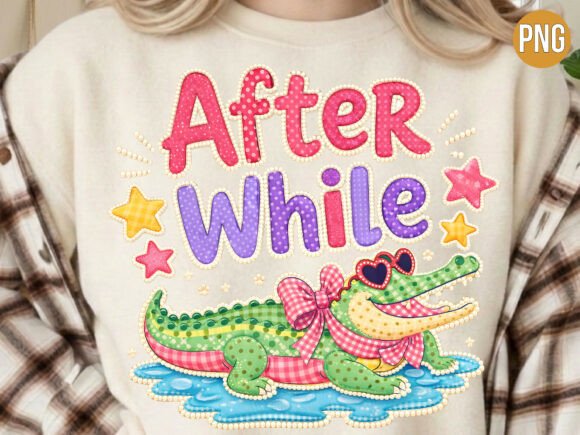
Cute Faux Embroidery Alligator Design Review
I recently came across the Cute Faux Embroidery Alligator PNG SHIRT on Creative Fabrica while sourcing visuals for a small sweatshirt collection I am planning for the upcoming season. As someone who works daily with machine embroidery design files, I am always a little skeptical when a product is presented as a faux embroidery graphic rather than a true stitch file. Still, I wanted to see whether this alligator could earn a spot in my workflow, especially for boutique apparel projects that rely heavily on that stitched, textured look in product photos and listings.
First Impression of the Alligator Graphic
When I opened the preview, the Cute Faux Embroidery Alligator PNG SHIRT immediately struck me as playful and approachable. The alligator has a soft, almost storybook personality. It does not read as aggressive or overly juvenile. The faux stitching effect gives it a handcrafted feel that mimics the look of actual thread colors layered on textured fabric. The visual personality sits somewhere between casual boutique charm and a slightly rustic handmade aesthetic. I would describe the mood as warm, cozy, and just a little whimsical. For a boutique brand trying to build a recognizable identity around approachable wildlife motifs, this design fits neatly into that niche.
The detail level surprised me. The faux stitches are distributed in a way that mimics realistic stitch density variation. There are areas where the thread appears tighter and others where it loosens slightly, which is exactly what happens on a real embroidered garment as the needle moves across different fabric textures. That attention to detail is what separates a premium-looking faux embroidery PNG from a flat clipart file with a basic stitch filter applied. This one feels intentional.
Where This Design Shines in Apparel Projects
For anyone building a small collection around sweatshirt embroidery or hoodie design, chest placement is often the first test. The proportions on this alligator graphic seem well suited to a standard chest-left position on unisex and women's crewneck sweatshirts. It is compact enough to avoid wrapping awkwardly around the side seam but still large enough to read clearly from a few feet away. I ran a mental placement test across several garment types and here is where it felt strongest.
- Neutral sweatshirts in oat, cream, or taupe let the green tones pop without overwhelming the design.
- Pastel hoodies in blush, mint, or lavender soften the gator further and lean into that cozy boutique aesthetic.
- Dark apparel like charcoal, navy, or forest green create a subtle tonal contrast that feels premium and understated.
- Oversized garments with a slightly dropped shoulder seam give the design room to breathe without looking lost.
- Tote bag design applications also work well here, especially on canvas or structured cotton bags where the flat PNG can be printed and still carry that textured embroidered illusion.
For a custom apparel shop selling through Etsy or a standalone website, this alligator design could easily anchor a mini collection of three to five pieces. Think a crewneck, a zip hoodie, a toddler tee, and a canvas tote all carrying the same motif. That kind of visual consistency builds product recognition and helps customers trust the brand identity before they even read the product description.
Using the Design for Sleeve Accents and Back Placements
Beyond the standard chest hit, I would not overlook the potential for sleeve accents. On a raglan sleeve or a dolman-cut sweatshirt, a scaled-down version of this gator could sit beautifully on the outer upper arm. It is an unexpected placement that boutique customers often perceive as more thoughtful and elevated. For back designs, I would consider enlarging the graphic and centering it between the shoulder blades on a lightweight denim jacket or an unlined chore coat. The contrast between the rugged garment and the soft alligator personality creates exactly the kind of tension that drives engagement in lifestyle product photos.
How the Faux Embroidery Effect Performs on Different Surfaces
One thing I always consider with faux embroidery PNGs is how they behave on printed or pressed surfaces versus how they appear on screen. The Cute Faux Embroidery Alligator PNG SHIRT carries enough texture detail that a high-quality direct-to-garment print or a well-pressed DTF transfer should retain much of that stitched illusion. On fleece and ribbed fabric, however, the underlying texture of the garment itself can interfere with the visual clarity of the faux stitch lines. I would recommend testing on a scrap of the actual garment fabric before committing to a full production run, especially if the fleece has a deep nap or the ribbing is particularly pronounced.
On stretchy fabric, the faux embroidery PNG will not pucker or distort the way real stitching sometimes does. That is actually an advantage for garments with high elastane content where dense real embroidery might cause rippling. The flat application preserves the embroidered look without introducing tension issues. For curved surfaces like the crown of a baseball cap or the curved seam of a toddler onesie, the design holds up well as long as it is not placed directly over a bulky seam allowance.
Dark Garments and Contrast Considerations
On dark garments, the faux embroidery PNG relies on the contrast between the printed thread colors and the fabric background. If the garment is too dark and the design uses muted thread tones, the contrast can flatten out. I would pair this alligator with a garment color that sits at least two to three shades away from the darkest thread color used in the design. Otherwise, the intricate faux stitch work can disappear and the whole graphic starts to read as a muddy shape rather than a textured embroidery piece.
Practical Design Considerations Before Production
Even though this is a printable PNG and not an embroidery file like a DST or PES, the same production mindset applies. Before I list a finished garment in my shop, I go through a mental checklist that applies equally to digital embroidery file projects and faux embroidery printed pieces. Here is what I recommend reviewing before moving into production with this design.
- Test on scrap fabric that matches the final garment weight and composition.
- Check stabilizer choice if you are printing and then pressing, since the adhesive on some heat transfer materials interacts differently with fleece versus jersey.
- Review thread color contrast between the faux stitches and the printed garment base.
- Confirm hoop size is not a factor here since this is a PNG, but check your print area dimensions on the heat press or DTG printer.
- Inspect stitch density visually once printed; the faux embroidery effect can lose crispness if the print resolution is too low.
- Test on similar garment fabric to see how the design photographs for your listings.
- Compare placement options using paper mockups taped to the garment before committing to a final position.
- Check Creative Fabrica product details and licensing before selling finished apparel to make sure your intended use aligns with the included terms.
I always advise fellow Etsy seller colleagues and small shop product creators to confirm those licensing specifics directly on the product page. The product description notes this is a premium digital design file intended for creative and Print on Demand projects, which suggests commercial latitude, but I would still read the exact terms before printing inventory for sale.
Building Brand Identity Around a Cohesive Motif
One of the harder things to achieve as a handmade product seller is visual consistency across a collection. The Cute Faux Embroidery Alligator PNG SHIRT introduces a motif that is specific enough to be memorable but broad enough to work across multiple product categories. That is a sweet spot for brand identity. A customer who buys a sweatshirt with this alligator might later purchase a matching tote bag or a toddler hoodie featuring the same graphic. The repeat exposure builds buyer trust and makes the shop feel intentional rather than scattered.
For social media graphics and printable mockups, the PNG format makes it easy to layer this design onto lifestyle images before any physical product exists. That pre-production visual testing can inform which garments to actually order for sampling. It also generates early feedback from audiences on Instagram or Pinterest before committing to a full stock inventory. I have used similar workflows for commercial embroidery planning, where the mockup phase determines which designs get digitized. With faux embroidery graphics, the mockup and the final product can be much closer in appearance, which reduces the gap between what customers see online and what arrives at their door.
Staying Mindful of Placement Challenges
Even a well-executed graphic can underperform if the placement ignores real-world garment behavior. Here are a few areas where I would exercise caution with this design.
- Small chest placement on youth or infant garments may shrink the design below a readable size.
- Dense stitch areas are not a factor here, but areas with heavy print coverage can feel stiff on thin fabrics.
- Stretchy fabric panels like side ribbing or shoulder inserts can warp the printed graphic over time.
- Fleece with a thick pile may blur fine detail unless the print method accounts for the texture.
- Ribbed fabric surfaces like cuffs or neckbands are generally too narrow and uneven for a clean placement.
- Areas that may stretch or wrinkle frequently, like elbow patches or lower torso zones on fitted tees, can degrade the printed faux embroidery appearance with wear.
I tend to keep faux embroidery placements on stable, flat zones of the garment where movement and washing will not distort the printed stitch illusion. The chest, upper back, sleeve, and tote panel all qualify. Lower torso and high-stretch side panels do not make my shortlist.
Who Benefits Most From This Design
This alligator graphic is not trying to be everything to everyone, and that focus is what makes it useful. Creative Fabrica embroidery shoppers who lean toward cute, accessible wildlife designs will find this fits their product line naturally. Boutique brand owners building cozy seasonal outfits around autumn or winter launches can use this motif to soften the collection. Digital sellers creating ready-to-print transfers and printable mockup bundles can package this with complementary designs for a cohesive shop section. Handmade business owners who participate in local markets or pop-up events will appreciate how quickly this graphic communicates a gentle, handcrafted vibe from across the booth.
After spending time with the Cute Faux Embroidery Alligator PNG SHIRT, I see it as a smart addition to a boutique apparel designer's visual library. It brings warmth, character, and enough faux embroidery texture to elevate products beyond basic printed tees. While it does not replace a true machine embroidery design file, it serves a different purpose and does that job thoughtfully. For anyone curating a small sweatshirt or hoodie collection and wanting that stitched look without the production complexity of physical embroidery, this design earns its place in the workflow. I will be testing it on a cream fleece crewneck first and watching how the faux thread texture holds up after pressing. Based on what I have seen so far, I expect it will photograph beautifully and draw exactly the kind of customer who values playful, well-crafted apparel details.