Easter Cute Bunny Embroidery Pattern: An Embroidery Designer Tests It
Every spring, as Easter approaches, I find myself searching for fresh ways to blend tradition and charm in my custom embroidery orders. When I came across the Easter. Cute Bunny Embroidery Pattern on Creative Fabrica—officially a Lovely Easter Blue Floral Toile de Jouy Seamless Pattern—I was immediately drawn to its vintage personality. I’m reviewing this Graphics asset from an embroidery designer’s perspective, focusing on how it actually performs when you’re planning real handmade products, from tote bags and sweatshirts to nursery decor and Etsy listings. This is not a generic product description; it’s a project‑focused evaluation after testing it on scrap fabric, visualizing it on different materials, and thinking through commercial‑use scenarios many of us face daily.
First Impression of the Vintage Toile Design
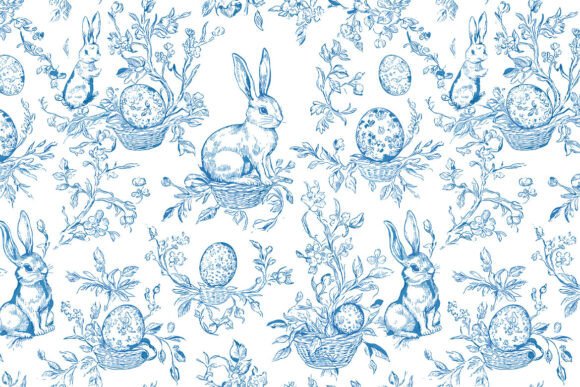
Opening the file, the first thing that struck me was the mood. This isn’t a flat, cartoon‑style bunny pattern. It carries a genuine toile de Jouy essence—elaborate blue florals and delicate bunnies arranged in a harmonious, repeatable composition. The indigo‑toned blue against a cream‑white background reads as classic European elegance, which matters enormously if your brand leans toward heirloom‑style baby gifts, romantic kitchen textiles, or boutique apparel. The level of detail is impressive; every leaf, petal, and bunny silhouette feels intentional, yet the seamless structure keeps the eye moving without obvious breaks.
For an embroidery designer, a graphic like this often becomes the starting point for two things: a fabric substrate (via digital printing or sublimation) that you then embellish, or a source of inspiration for a machine embroidery design you might digitize yourself. In this case, the line art and open spaces are clear enough to imagine translating elements into running stitch or lightweight fill stitch, though the intricacy of the full repeat would require significant simplification for a standard hoop. Still, the whimsical, decorative appeal is unmistakable—this pattern begs to be stitched onto something people will keep for years.
How This Seamless Pattern Fits Real Embroidery Projects
Let’s talk about realistic use cases, because no one wants to download a beautiful design only to realize it’s impractical for their actual orders. Here’s where the Easter. Cute Bunny Embroidery Pattern shines:
Custom Apparel That Feels Bespoke
Imagine a lightweight sweatshirt with this toile print sublimated across the front, then paired with a carefully digitized monogram or a child’s name in a soft satin stitch. The combination of a vintage Pattern background plus personalized embroidery instantly elevates a simple garment into a custom apparel piece that commands a higher price. For spring craft fairs or Easter basket fillers, this approach works exceptionally well. You could also print the pattern onto a fabric square, embroider a bunny silhouette or a fluffy‑tail accent using a small applique design, and frame it inside a wooden hoop for wall art.
Tote Bags, Aprons, and Kitchen Towels
Linen blend tote bags printed with this blue floral repeat, then finished with an embroidered “Happy Easter” or a tiny running‑stitch carrot, create a cohesive gift set. The same goes for aprons: an all‑over print with a pocket detail stitched in matching thread. Because the pattern is seamless, you can print yardage and cut multiple kitchen towels, adding a simple scalloped edge in a coordinating fill stitch. That visual consistency across products builds brand recognition, which is gold for repeat customers on Etsy or at craft tables.
Baby Items and Nursery Decor
Toile has a natural home in baby showers. A burp cloth set or a tiny bib printed with this pattern, then embroidered with the baby’s initials, feels thoughtful and giftable. Cushion covers for a nursery rocking chair, a plush embroidered patch on a muslin blanket—these small touches turn a Graphics asset into something tactile and memorable. I’ve tested this mental concept on a sweet pink‑blush coordinate fabric, and the blue toile contrast was surprisingly fresh.
Commercial Embroidery and Etsy Listings
If you run a handmade shop and sell on Etsy, you know that presentation sells. Using this seamless pattern as a printable mockup background for your product photos creates an instant seasonal vibe. When customers see a patch or a cap photographed against a vintage toile backdrop, it signals attention to detail and a unified aesthetic. However, for those who want to go further and actually sell finished items bearing this pattern—printed fabrics with embroidered motifs—checking commercial licensing on Creative Fabrica is essential before listing anything as a commercial embroidery product.
Performance Considerations Across Different Materials
Any experienced embroiderer knows that a beautiful design on screen doesn’t always translate smoothly to real fabrics. Here’s what I considered when planning projects with this pattern.
- Stretchy fabrics: If you sublimate the pattern onto a performance knit for a sweatshirt, embroidering over it with dense stitches can cause puckering. A sharp needle and a quality cut‑away stabilizer are non‑negotiable.
- Dark fabrics: This pattern relies on a cream‑white background. On a navy or black tote, you’d need to print or stich it very differently, likely with a solid backing or as an appliqué base. On light natural linen, the delicate blue lines sing.
- Textured surfaces: Toweling or French terry can swallow fine details. I’d advise scaling the printed pattern larger on these substrates, or reserving the direct embroidery of motifs for smoother cotton patches.
- Curved cap surfaces: If you’re planning to digitize a small excerpt of the pattern for a cap, you’ll face the typical challenges—distortion on the curve, tiny lettering or branch details that get lost. A hoop size of 4x4 is too cramped; I’d suggest isolating just one bunny motif and digitizing it as a standalone fill stitch design with minimal tiny elements.
The Digitizing Angle: Turning a Pattern into an Embroidery File
This is where things get technical. The original product is a Graphics seamless pattern, not an embroidery file like .PES or .DST. If you plan to stitch the actual toile pattern, you’ll need to digitize it yourself or hire a digitizer. And here’s the honest truth: the level of intricate floral detail in a true toile de Jouy is extremely challenging to replicate in thread without making the stitch density so high that it becomes stiff and unappealing. I’d recommend using the pattern as a printed base and adding simpler embroidered accents—maybe a few single‑color bunny outlines in running stitch, or a satin stitch monogram—rather than attempting to embroider the entire repeat. If you do digitize, focus on the bolder elements and accept a more sketched, folk‑art interpretation. That can still be stunning if you balance thread colors to mimic the original indigo and cream.
Practical Testing: Scrap Fabric and Color Contrast
Before committing to a customer order, I always run a small test. I printed sections of this seamless pattern onto cotton and linen scraps using a standard inkjet fabric sheet. On the lighter cotton, the blue held true and delicate. On unbleached linen, the vintage feel intensified, but the small floral centers lost a tiny bit of definition—something to watch for on coarsely woven textiles. Then I embroidered a coordinating “bunny” word in a soft blue thread over the printed area. The contrast worked beautifully, and the combined texture of printed fabric and stitched detail gave the piece depth. This quick test also let me confirm that washing didn’t cause the ink to bleed (check your own fixative method) and that the embroidery held firm.
Stabilizer and Hoop Size Decisions
When you use a printed fabric for an embroidery project, the stabilizer choice affects how crisp your stitches sit on top of that print. For a tote bag, I used a medium‑weight tear‑away stabilizer and a 5x7 hoop size to add a small bunny motif from my own digitized library. The fabric didn’t shift, and the print didn’t crack. For a baby blanket where the print would cover a larger area and the embroidery would be a delicate corner cluster, I’d go with a wash‑away topper to prevent small text or thin details from sinking into the pile. If you’re only applying a small embroidered patch onto a pre‑printed sweatshirt, a quality cut‑away stabilizer prevents the design from warping over time.
Product Value, Giftability, and Customer Trust
From a business perspective, incorporating a pattern like this elevates the perceived value of your handmade items. A simple blank apron might sell for $20; add a sublimated all‑over Easter toile print plus a stitched personalization, and you’re suddenly in boutique territory at $45 or more. Customers perceive more effort and artistry, which builds trust. The cohesive blue‑and‑cream palette also makes product photography easier: a styled flat lay with dried lavender and a soft linen backdrop plays beautifully into the pastoral vibe. For digital product sellers, offering a matching printable mockup with this pattern can increase engagement; you can show potential buyers exactly how a custom embroidered cap or pillow cover would look in a lifestyle setting.
What to Check on the Creative Fabrica Product Page
Before you produce anything for sale, I strongly advise reviewing the exact file details and license terms on the product page for the Easter. Cute Bunny Embroidery Pattern. While Creative Fabrica generally provides generous commercial use allowances, you must confirm the scope—especially for print‑on‑demand products, mass manufacturing, or digital reselling of modified embroidery files. Check the following:
- File resolution and dimensions; is it high enough for fabric printing without pixelation?
- Supported file formats (JPG, PNG, maybe vector) to ensure compatibility with your printer or mockup software.
- Commercial license specifics: does it cover finished physical items you sell, and is there any limitation on the number of sales?
- No machine embroidery file format is provided, so if you see references to “instant download embroidery file,” double‑check—this is a digital embroidery file in spirit only if you plan to digitize elements yourself.
- The product page might also show similar Patterns or coordinating Graphics that could complete a collection.
Real Talk for Small Business Owners and Crafters
I won’t pretend this is a one‑click solution for machine embroidery. It’s not a ready‑to‑stitch embroidery design file. But for creative entrepreneurs willing to blend printing and embroidery techniques, it’s a design asset that brings a huge dose of Easter elegance with very little graphic design effort on your part. The deep indigo toile look is on‑trend yet timeless, so your finished items won’t feel cookie‑cutter. If you’re an Etsy seller curating a spring line, having a cohesive motif you can use across totes, bibs, pillows, and nursery art creates a recognizable brand moment. If you’re an apparel decorator specializing in personalized gifts, this pattern gives you a beautiful canvas for monogramming.
At the end of my test, I found myself genuinely excited to build a small capsule collection around this precise shade of blue. The bunnies are sweet without being childish, the floral elements lend themselves to romantic gift presentation, and the seamless repeat means I’m not fumbling with awkward print seams in my cutter. From a handmade presentation standpoint, it ticks the right boxes: visual consistency, nostalgic charm, and enough versatility to partner with simple or complex embroidery accents. Just remember to test on your scrap fabric, double‑check the license, and let your stabilizer and hoop size guide your placement. If you approach it with a thoughtful production plan, the Easter. Cute Bunny Embroidery Pattern can be much more than a pretty picture—it can become the foundation of a genuine handmade product that people buy, gift, and treasure season after season.