Linen and Lace Delicate Embroidery: A Designer’s Review
First Impressions: Soft, Timeless, and Undeniable Elegance
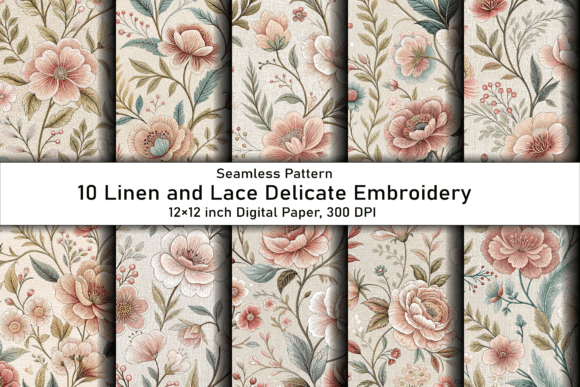
When I unzipped the Linen and Lace Delicate Embroidery digital paper collection, I felt an immediate sense of calm. These ten seamless patterns whisper rather than shout, drawing the eye with subtle lace motifs, linen-like textures, and a gentle vintage romance that feels both inherited and fresh. For a crafter preparing a booth full of handmade market products, that quiet luxury is exactly what transforms a casual passerby into a paying customer. The collection reads as premium farmhouse meets heirloom quality, a mood that photographs beautifully and feels expensive to the touch even before you stitch a single thread.
Unlike loud, trendy graphics that can feel dated by next season, Linen and Lace Delicate Embroidery leans into a timeless aesthetic. It suggests sun-bleached linens drying on a summer clothesline, delicate handkerchiefs pressed in a cedar chest, and the kind of handwork that makes a customer pause and ask, “Did you make this yourself?” That emotional pull is pure selling gold for craft fair sellers, Etsy shop owners, and embroidery business owners who understand that perceived value starts long before a price tag is read.
The Look That Stops Craft Fair Shoppers Mid-Stride
From across a busy market aisle, your display has a split second to grab attention. Linen and Lace Delicate Embroidery does that with a sophisticated softness that stands out against a sea of bright, busy tables. The patterns carry an air of quiet prestige—neutral cream tones, intricate openwork, and vintage botanical whispers that feel neither childish nor overly formal. When stitched out as a finished machine embroidery design on a natural linen tote bag or a creamy apron, it reads as effortlessly elegant. Shoppers who gravitate toward minimalist decor, French country kitchens, or romantic handmade gifts will be drawn in before you even explain the product.
Because the designs are highly decorative without being cluttered, they also allow the handmade quality of your stitching to shine. A well-digitized embroidery file from this collection can mimic the look of real lace appliqué or hand-embroidered cutwork, blurring the line between machine efficiency and artisan craftsmanship. That elevates your entire booth display from simple craft to boutique gifting.
Best Products for This Elegant Embroidery Set
When planning inventory for a weekend market, versatility matters as much as beauty. Linen and Lace Delicate Embroidery proves its worth across a wide range of best-selling craft fair products. Here’s where I see the patterns shining brightest:
- Linen tote bags and market bags: The seamless patterns are made to fill a generous hoop area. A full-panel lace design across the front of a natural linen or cotton tote instantly creates a premium, giftable item shoppers will use for years.
- Aprons and kitchen towels: As tea towel embroidery or apron accents, these patterns transform everyday kitchen textiles into boutique decor. Imagine a vintage lace border stitch along the hem of a flour sack towel—simple, repeatable, and highly profitable.
- Pillow covers and fabric pouches: A single lace medallion framed by a soft linen background on a rectangular pillow cover creates an heirloom accent piece perfect for bridal showers or cozy home decor lines.
- Embroidered patches and small zip bags: Shrink a delicate corner motif into a patch size and you have a dainty add-on for jean jackets, makeup pouches, or market booth “impulse buy” bins.
Because the patterns repeat seamlessly, you can also scale them to fit almost any hoop size, from small embroidery fields on a cap to large multi-hoop designs for wall hangings or table runners. That flexibility means you can build an entire product line around one digital embroidery file aesthetic, keeping your brand cohesive and your production efficient.
Small Accents with Big Visual Punch
One of the smartest ways to use Linen and Lace Delicate Embroidery in a craft fair setting is not as a full-field design but as a refined accent. A lace corner motif on a fabric pouch, a delicate vine climbing the side of a denim jacket pocket, or a tiny floral band across a cap visor draws the eye without overwhelming the product. Customers love these subtle details; they feel intentional and custom.
When working at a reduced scale, however, you must be mindful of how the pattern details hold up. Tiny lace openings and slender line elements can close up if stitch density is too high or stabilizer choice is off. Always test on scrap fabric first, and consider slightly enlarging the most delicate areas or simplifying the digitizing in spots where the thread might oversaturate the fabric. The goal is to keep the airy, breathable quality that makes Linen and Lace Delicate Embroidery so appealing in the first place.
Practical Production: Turning Patterns into Profitable Products
For an embroidery business owner preparing for a market, production practicality is non-negotiable. These designs demand a digitizing approach that respects the fine linework and open negative space. When converting the design assets into a machine embroidery design, choose thread colors that echo the vintage mood—off-whites, soft creams, ecru, and maybe a single muted blush or sage for contrast. High-sheen rayon can look too modern; a matte polyester or cotton thread better mimics authentic handwork.
Stitch density must be carefully balanced. The lace motifs naturally carry areas of dense stitching that, if not managed, can cause puckering on lightweight fabrics or feel stiff against the skin. I recommend a soft tear-away or cut-away stabilizer on smooth linen and cotton substrates to maintain drape. For textured towels, a water-soluble topper is essential to keep the surface loops from swallowing the delicate details. A test stitch of at least one pattern corner on the exact fabric you’ll sell is the only way to confirm your settings before batch production.
Also consider how quickly you can reproduce each item. A design with fewer thread changes and a compact stitch path lets you hooped and produced faster, which matters when you’re thirty tea towels deep and the market is three days away. Many of the patterns in this set can be simplified into a clean one- or two-color job without losing the vintage soul, making them ideal for batch production runs.
Photography and Online Listings: Capturing the Lace Illusion
Even if your primary sales happen in person, your Etsy listing or Instagram grid still needs to do heavy lifting. Linen and Lace Delicate Embroidery photographs like a dream when styled simply. Lay a finished tote against a rustic wood table, tuck a sprig of dried lavender beside it, and let natural side light rake across the stitch texture to emphasize depth. The lace pattern reads clearly on camera, and the neutral palette naturally draws the eye to the product, not a distracting background.
For digital sellers offering printable mockups or embroidery design files for commercial use, these seamless patterns give you high-quality background textures or lifestyle overlays that elevate your listing instantly. A buyer browsing embroidery files on Etsy will respond to a presentation that already looks soft, tactile, and finished—exactly the feeling this collection provides.
Careful-Use Notes for Flawless Stitching Every Time
No design is foolproof, and with Linen and Lace Delicate Embroidery, the very details that make it beautiful also require a disciplined hand. Pay close attention to these points before you commit to a full production run:
- Dense stitch areas: Some lace fill sections may become heavy. Reduce density slightly in your embroidery software to keep fabric soft and avoid bulletproof stiffness on wearables.
- Tiny details and thin linework: If your smallest needle can’t cleanly render a line, edit the design to widen those elements just enough to maintain the illusion without thread breaks.
- Small lettering or text inclusions: Should you add custom text to a design, keep script above 0.25 inch tall on smooth fabrics. On textured towels or curved cap surfaces, increase size further and use a satin stitch with proper underlay.
- Dark fabrics: Light lace motifs on deeply colored linen or canvas can lose contrast. Test a slightly thicker thread or add a subtle tone-on-tone shadow outline behind the lace to keep the pattern legible.
- Curved cap surfaces: Flattening a lace medallion across a cap front requires careful hooping and registration. Opt for smaller accent placements rather than large continuous patterns on headwear.
- Textured towels: High pile will pull delicate loops out of alignment. A heavy water-soluble topping, sharp needle, and slower machine speed are your best friends here.
Display Ideas for a High-End Craft Fair Booth
How you stage your finished product directly influences buyer engagement. With Linen and Lace Delicate Embroidery, lean into a romantic, farmhouse-inspired display. Use natural wood crates, vintage lace doilies as underlay on table surfaces, and neutral linens as tablecloths. Hang finished tote bags at eye level from a distressed wooden ladder. Roll a few embroidered tea towels into a rustic basket with brown paper bands and simple twiki ties. The more you can make the customer imagine these items in their own home, the faster they sell.
I also recommend displaying at least one embroidery sample still in the hoop, so customers see the process and understand it’s real machine embroidery. It adds perceived value and reinforces the handmade quality. Pair the hoop display with a small sign describing the vintage inspiration. This kind of visual storytelling builds trust and encourages longer booth visits.
Embroidery Designer Checklist Before Your Next Show
After years of booth preparation, I rely on a mental checklist to avoid costly mistakes. Run through these steps once you’ve selected your favorite patterns from Linen and Lace Delicate Embroidery:
- Test stitch on scrap fabric matching your final product weight exactly.
- Check thread contrast in natural daylight as well as under your booth lighting; what looks crisp on screen may wash out under warm tent LEDs.
- Review spacing and pull compensation so lace motifs don’t gap or overlap unexpectedly.
- Confirm your hoop size accommodates the full motif without distortion, especially for seamless repeats.
- Inspect stitch density on at least one complete unit; adjust if fabric puckers or feels rigid.
- Use the right stabilizer for your fabric: light cut-away for apparel, tear-away for home decor that won’t be laundered heavily, and adhesive backing for tricky pouches.
- Create at least one real mockup on the exact item you’ll sell—not just a digital preview—to evaluate drape, texture, and visual impact in person.
- Compare fabric colors: the same lace design on a sand-colored linen can feel completely different than on a stark white cotton. Choose the combination that best represents your brand.
- Confirm commercial licensing: since Linen and Lace Delicate Embroidery is a digital collection of seamless patterns, verify that your permitted use extends to selling finished physical products, especially if you also offer the digitized embroidery file for resale. If license terms aren’t explicitly outlined in the product listing, contact the creator before investing significant production time.
Final Verdict: A Smart Investment for Elegant Handmade Lines
For the craft fair seller, boutique maker, or creative entrepreneur building a signature product line, Linen and Lace Delicate Embroidery offers immense selling power in a soft, sophisticated package. It appeals directly to the customer who values handmade quality, timeless style, and details that feel genuinely special. Whether you stitch it onto a tote bag, frame it as an embroidered patch, or turn it into a whole suite of kitchen textiles, this collection helps you command a higher price point and present a cohesive, memorable booth.
I’ll be converting several patterns into my own retail line of tea towel embroidery and linen pillow covers, confident that the finished products will stop shoppers in their tracks. Just remember to test carefully, respect the delicate nature of the design, and pair it with materials that honor its vintage heart. Do that, and Linen and Lace Delicate Embroidery will quietly, beautifully, sell itself.