Teacher Teaching in Classroom
A Warm, Thoughtful Redwork Design That Speaks Volumes
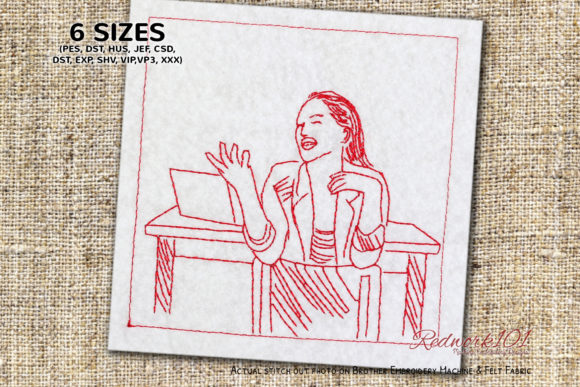
As an embroidery designer who’s tested hundreds of school-themed motifs for personalized gift shops and Etsy sellers, Teacher Teaching in Classroom immediately stood out—not for flashiness, but for quiet sincerity. This is a classic redwork embroidery, clean-lined and heartfelt, evoking chalkboards, student notebooks, and the gentle authority of a caring educator. It doesn’t shout—it smiles. The mood is warm, nostalgic, and deeply handmade: think vintage classroom charm meets modern gifting sensibility. There’s no cartoonish exaggeration or seasonal clutter—just a grounded, elegant silhouette of a teacher at the front of a room, rendered with confident, open-stitch clarity. For baby embroidery, wedding gifts, or custom nursery decor, that emotional resonance matters more than complexity.
Where This Design Truly Shines
Teacher Teaching in Classroom adapts beautifully across product categories—especially where meaning outweighs trend. On a soft cotton baby blanket? It reads as a tender nod to future learning and mentorship. Stitched onto a linen kitchen towel? It becomes a quiet tribute—ideal for retiring teachers or educators celebrating milestones. As a pillow cover for a teacher’s lounge or home office, it adds personality without overwhelming. On a canvas tote bag for back-to-school fairs or PTA events, it signals pride and appreciation in a way stock fonts never could. For wedding keepsakes—say, a framed hoop or embroidered handkerchief—it subtly honors mentors who shaped the couple’s journey. And for Etsy sellers listing digital embroidery files or finished handmade products, this design bridges practicality and sentiment: it’s instantly recognizable as “School”-themed, yet refined enough to avoid cliché.
Smart Pairings for Small Business Makers
- Baby embroidery: Works especially well on organic cotton swaddles or muslin burp cloths—pair with soft red or burgundy thread for gentle contrast against light fabric.
- Wedding gift: Combine with monogrammed initials or a date in subtle satin stitch beside the design for heirloom appeal.
- Personalized towel & apron: Holds up cleanly on medium-weight terry and midweight linen—avoid overly plush or looped textures that may obscure fine lines.
- Nursery decor: Ideal for wall hangings or quilt blocks when stitched on stable quilting cotton with lightweight stabilizer.
- Etsy seller & craft fair product: Use in printable mockups showing the design on multiple items (tote, pillow, towel)—it photographs clearly and conveys story at a glance.
Where to Proceed With Care
This redwork design thrives on clarity—but that also means some surfaces require thoughtful planning. Avoid stitching Teacher Teaching in Classroom on heavily textured fabrics like thick terry towels or bouclé knits; delicate outlines can blur. Curved surfaces—like mugs or rounded tote handles—distort stitch alignment unless digitized with contour compensation (check your embroidery file notes). Stretchy baby clothes? Not ideal unless you use high-quality cutaway stabilizer and test seam placement rigorously. Dark fabric demands careful thread color selection—redwork traditionally uses red thread, but on navy or charcoal, consider brick red or rust for better visibility. And because it includes readable elements (like the chalkboard detail), avoid shrinking it below 3.5 inches wide—small lettering or fine features may not resolve cleanly, especially on lower-density machines.
Why Customers Trust This Design—Before They Even See the Finished Product
In my experience curating designs for small shop owners, Teacher Teaching in Classroom builds trust fast. Its redwork style signals authenticity and craftsmanship—not mass-produced clip art. When customers see it on your Etsy listing or social preview, they intuitively understand: this is a handmade product, thoughtfully chosen. That perception lifts perceived value, especially for personalized gifts where emotion drives purchase. Photographed on a folded tea towel or nestled in a gift box, it invites engagement: “Who’s this for?” “What’s their story?” That narrative pull increases time-on-page and conversion. For wedding gift designers or baby product creators, it also signals care—you’re not just selling thread and fabric; you’re helping someone honor a relationship.
Practical Embroidery Notes Every Maker Should Run Through
- Test on scrap fabric first—especially if using non-standard blends or dark backgrounds.
- Confirm thread color contrast before bulk stitching. Redwork relies on tone-on-tone subtlety—test both light and dark fabric mockups.
- Check hoop size compatibility. While not specified, redwork designs like this typically fit comfortably in a 4x4 or 5x7 hoop—verify before digitizing or resizing.
- Review stitch density. Redwork tends to be low-density, but confirm your file isn’t over-stitched in tight areas—excess density causes puckering on lightweight cottons.
- Use appropriate stabilizer. Tear-away works for stable wovens; cutaway is safer for knits or frequent-wash items like towels and blankets.
- Inspect small details post-stitch. The chalkboard outline and teacher’s posture should read clearly—blurry edges suggest tension or stabilizer mismatch.
- Verify commercial licensing. Since this is intended for personalized gift products and small shop use, ensure your embroidery file grants rights for resale of finished goods—don’t assume.
A Timeless Choice for Meaningful Makes
Teacher Teaching in Classroom isn’t just another machine embroidery design—it’s a storytelling tool. For embroidery makers building a brand around intention, for Etsy sellers curating emotionally intelligent listings, and for small business owners who know a great personalized gift starts with respect for craft and connection, this redwork motif delivers quietly, consistently, and warmly. It fits naturally into the School category without leaning on tropes, and its Embroidery roots shine through every clean line. Whether stitched on a baby’s first blanket or a teacher’s retirement gift, it says what words sometimes struggle to: You made a difference. And in handmade product creation—that’s the highest stitch count of all.