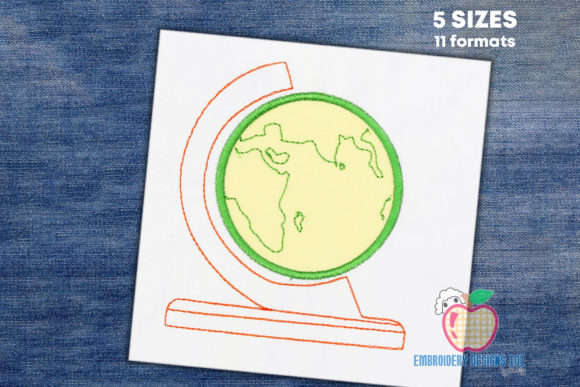
The Globe of World in Old Style Applique
First Impression: Timeless, Thoughtful, and Quietly Bold
As an embroidery designer who’s prepped over 200 craft fair booths—and shipped thousands of embroidered tote bags, tea towels, and patches—I opened The Globe of World in Old Style Applique expecting something nostalgic. What I found was more: a design that reads as both scholarly and soulful. It doesn’t shout. It invites. That “old style” in the title isn’t just decorative—it signals hand-drawn charm, subtle line weight variation, and cartographic warmth. It feels like a vintage atlas page reimagined for modern hands: not too cute, not too academic, but deeply wearable. For School-themed collections or globally minded handmade brands, it lands with quiet authority.
Where It Shines on Craft Fair Products
This machine embroidery design excels where storytelling meets utility. On a natural canvas tote bag? Perfect—centered above the pocket, it reads clearly from six feet away and sparks conversation (“Is that hand-stitched?” “Where’s your favorite country marked?”). As apron embroidery? Ideal for the chest pocket or lower left corner—its balanced shape holds up against movement and washing. For tea towel embroidery, it works best on the hem or corner: the old-style lines soften against textured linen-cotton blends without competing.
On caps, proceed with caution—unless you’re using a low-profile structured cap with a smooth front panel. The globe’s curvature can distort on high-crown or flex-fit styles. But as an embroidered patch? Outstanding. Stitch it cleanly onto denim jackets, backpacks, or market bags—it adds instant character and scales beautifully at 3–4 inches. Small fabric pouches and pillow covers also benefit: the design feels intentional, not busy, and elevates a simple item into a giftable handmade product.
What Makes It Sell at the Booth (and Online)
At a craft fair, The Globe of World in Old Style Applique stands out because it’s recognizable *before* someone reads the tag. Its silhouette is distinct—no generic globe icon here. Customers pause. They tilt their head. They ask questions. That pause is gold. For Etsy sellers and small shop owners, that same clarity translates to stronger printable mockups and cleaner digital listings. It photographs well on light and mid-tone fabrics, especially when paired with muted thread colors (think navy, charcoal, olive, or deep rust) that honor the “old style” aesthetic without fading into the background.
It’s also highly repeatable for batch production. Because steps are separated by color—and because the design avoids excessive micro-detail—it flows smoothly across multiple hoops and machines. No frantic rethreading. No tiny lettering that vanishes at 2.5 inches. That consistency saves time, reduces waste, and keeps your booth inventory cohesive.
Careful-Use Notes: Protect Your Stitch Quality
- Dense stitch areas: Check the ocean regions—if filled with satin or fill stitch, they may pucker on lightweight cotton. Use medium-weight cutaway stabilizer underneath.
- Fabric texture: Avoid heavy terry cloth or thick waffle-weave kitchen towels. Stick to smooth weaves for crisp definition.
- Dark fabric: Test thread contrast first. Some old-style designs rely on subtle shading—low-contrast threads will disappear on black or navy.
- Small sizes: Below 2.75 inches, coastline details may blur. Reserve smaller versions for patches or labels—not focal points.
- Curved surfaces: Caps and curved pouches need precise hooping and possibly a tear-away + wash-away stabilizer combo.
How It Elevates Your Brand & Booth Presence
The Globe of World in Old Style Applique doesn’t just decorate—it communicates. It tells customers your brand values craftsmanship, curiosity, and quiet sophistication. In a sea of floral monograms and trendy slogans, it offers depth. On your display table, pair it with earth-toned packaging, linen tags, and hand-lettered care cards: the design becomes part of a full sensory experience. Buyers don’t just buy a tote—they buy a feeling of connection, exploration, and intentionality. That perception lifts perceived value, supports premium pricing, and strengthens brand consistency across your entire lineup—from School-themed classroom goods to travel-inspired handmade gifts.
Pro Designer Checklist Before You Embroider
- Test the embroidery file on scrap fabric matching your final product (e.g., canvas for totes, terry for towels).
- Verify thread color order and contrast—especially if stitching on off-white or oatmeal fabric.
- Review spacing: Does the design breathe? Is there enough margin around the globe for clean trimming?
- Confirm hoop size compatibility—some “old style” outlines require slightly larger hoops than modern minimalist icons.
- Inspect stitch density in landmasses vs. oceans—adjust underlay if needed for stability.
- Choose stabilizer based on fabric weight and end use: cutaway for durability, tear-away for softer drape.
- Create at least one real mockup—not just a digital preview—to assess scale, flow, and tactile impact.
- Compare fabric colors side-by-side: a cream linen vs. natural cotton can change how thread tones read.
- Confirm commercial licensing terms before selling finished products—this is essential for Etsy sellers and wholesale partners.
Final Thought: A Design That Grows With You
The Globe of World in Old Style Applique isn’t a trend-chasing motif. It’s a foundational design asset—one that fits equally well on a teacher’s embroidered notebook cover, a boutique’s limited-run market bag, or a digital embroidery file bundle for fellow creatives. It balances heritage and usability, detail and clarity, meaning and marketability. For craft fair sellers building a loyal following—and for embroidery business owners investing in versatile, evergreen design assets—it’s not just another pattern. It’s a quiet anchor in your collection.