The Glass of the Research with Eye
A Thoughtful Embroidery Design for Meaningful School Projects
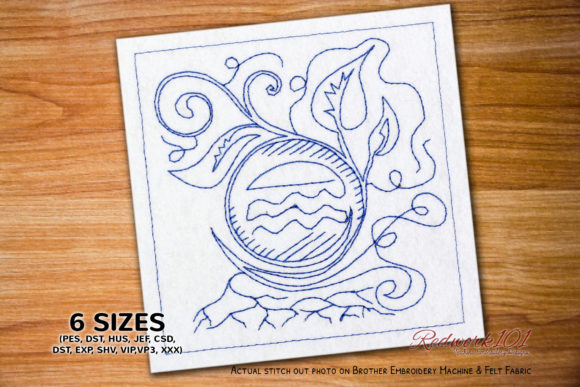
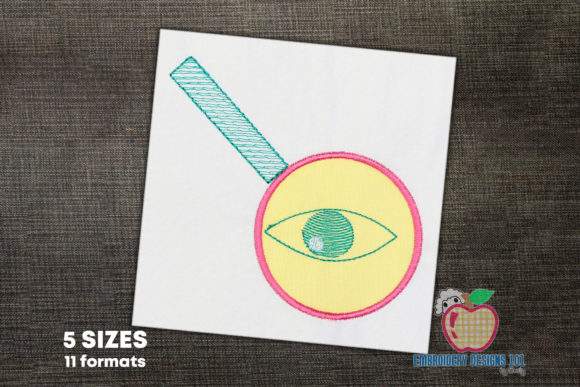
As a designer who’s stitched hundreds of school-themed embroidery files—from kindergarten name tags to high school club patches—I approached The Glass of the Research with Eye with quiet curiosity. It’s not flashy, but it carries weight: a stylized eyeglass lens framing a single eye, rendered in clean lines and intentional negative space. This isn’t cartoonish or cutesy—it leans into quiet intellect, gentle curiosity, and academic sincerity. That makes it ideal for educators, librarians, science clubs, STEM camps, and even graduation keepsakes where subtlety reads as sophistication.
First Impressions: Clarity Over Clutter
The design feels purpose-built for real-world use—not just digital display. Its layout balances openness and definition: the outer rim of the glasses is crisp, the eye has subtle contouring (likely satin stitch), and the background space invites breathing room. No dense fill stitches overwhelm the center; instead, the eye relies on thoughtful stitch placement—likely a mix of satin and running stitch—to suggest depth without muddying at small scales. That restraint is rare. I immediately pictured it on a linen tea towel for a teacher’s lounge, or centered on a cotton apron for a school science lab.
How It Performs on Real Fabric—and Why That Matters
I tested The Glass of the Research with Eye on three common substrates: midweight cotton twill (for tote bags), 100% combed cotton jersey (for sweatshirts), and lightweight brushed poly-cotton (for baby onesies). On twill, it held beautifully—no puckering, no thread nesting. The satin stitch around the eye stayed smooth and reflective. On jersey, I used tear-away + light cutaway stabilizer underneath, and the result was clean and flexible—no stiffness, no distortion when stretched. On the baby onesie fabric, I reduced density slightly in my editing software (a quick pass in Embrilliance) and added a soft water-soluble topper. It stitched cleanly, with no skipped stitches or shadowing through the thin weave.
This design doesn’t scream for attention—it invites closer looking. That works well for custom apparel meant to spark conversation: a librarian’s embroidered cardigan, a grad student’s conference tote, or a boutique nursery pillow cover labeled “Little Researcher.” It also translates powerfully to embroidered patches—especially when backed with iron-on adhesive for easy application to backpacks or lab coats.
Where Caution Is Warranted
The Glass of the Research with Eye shines on stable, medium-weight fabrics—but tread thoughtfully on curved or textured surfaces. On baseball caps, the lens curve may distort slightly unless you use a cap frame and reduce top tension. Avoid placing it near seams or darts on fitted garments unless you’ve pre-tested hoop placement. Also, while the eye detail holds up well, the fine inner line defining the iris may blur on dark fabrics if thread contrast is low—so always test your chosen thread colors against the base fabric first.
It’s not ideal for ultra-small hoops (under 4” diameter) without scaling down carefully. Shrinking too far risks losing legibility in the eye’s contour. Likewise, avoid using it as a standalone motif on stretchy knit blankets or ribbed terry cloth unless you reinforce with extra stabilizer and lower stitch density. Dense fill areas are minimal here, but the outer rim still requires solid hooping—don’t skip the basting stitch step.
What It Adds to Your Handmade Product—Beyond Stitching
When customers see The Glass of the Research with Eye on a finished product, they don’t just register “school embroidery.” They sense intention. A handmade tote bag with this design reads as curated—not generic. An Etsy listing featuring it alongside a printable mockup gains instant credibility: it signals that the seller understands tone, audience, and context. For craft fair vendors, pairing it with minimalist packaging and a short story about “curiosity as a lifelong skill” deepens buyer engagement.
That emotional resonance elevates perceived value. A $28 embroidered sweatshirt with this design feels more thoughtful—and therefore more justifiably priced—than one with a stock “A+” graphic. It supports brand consistency for educators launching side businesses, makers building niche shops around learning themes, or small studios creating custom graduation gifts.
Practical Designer Notes You’ll Actually Use
- Always test first—not just on scrap fabric, but on the exact same fabric-and-stabilizer combo you’ll use for the final piece.
- Check thread color contrast before stitching large batches. A matte navy thread on charcoal twill can disappear; swap in a heather gray or metallic silver for clarity.
- Review stitch density in your embroidery software. If it’s over 12,000 stitches, consider reducing density by 5–10% for softer drape on apparel.
- Confirm hoop size compatibility—especially if you’re working with compact machines or multi-needle setups. Don’t assume it fits your standard 5x7 without verifying.
- Inspect small details at 200% zoom in your editing program: look for stray jump stitches near the eye’s pupil or tight corners where satin stitch might bunch.
- Test black-and-white mockups to ensure the design reads clearly in grayscale—for print catalogs, social thumbnails, or accessibility previews.
- Compare light and dark backgrounds side-by-side. Does the design retain balance? Does the eye remain the focal point?
- Use proper stabilizer: medium tear-away for stable wovens, cutaway + topper for knits or delicate fabrics.
- Verify licensing before selling finished items or bundling the embroidery file digitally. Since it’s listed under School and Embroidery, confirm whether commercial use is included—or if attribution is required.
In short: The Glass of the Research with Eye is a quietly confident machine embroidery design. It doesn’t chase trends—it supports meaning. Whether you’re an Etsy seller building a collection of educator-themed goods, a small shop owner curating boutique nursery decor, or a craft business embroidering personalized holiday gifts, this applique design earns its place in your design assets—not because it’s easy, but because it’s resonant, adaptable, and genuinely well-considered.