Stationery Tools Design
First Impressions: A Thoughtful, Craft-Forward Mood
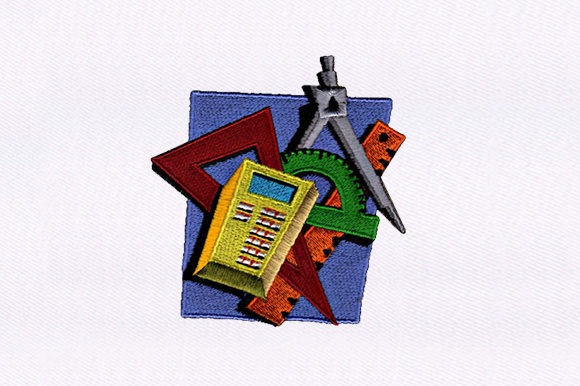
As an embroidery designer who’s stitched over 300 boutique apparel drops—mostly sweatshirts and hoodies—I opened Stationery Tools Design expecting charm, not clutter. What I found was a quiet confidence: clean outlines, balanced negative space, and intentional line weight that reads as both handmade and precise. It doesn’t shout—it invites. The mood lands somewhere between playful and polished: think pencil sketch meets inked illustration, with just enough texture to feel tactile in thread. It’s not overly feminine or rigidly academic—it breathes with warmth, making it ideal for a School-themed collection that avoids cliché (no apples or chalkboards here). On screen, the design suggests moderate stitch density—not sparse, not heavy—and a layout that respects fabric real estate without demanding center-stage dominance.
How It Lives on Sweatshirt Fabric
This isn’t a design that fights the garment—it collaborates. On neutral sweatshirts (heather grey, oatmeal, soft black), Stationery Tools Design gains quiet authority. The contrast works beautifully with muted thread colors—navy on charcoal, cream on heather brown, forest green on stone—letting the motif feel intentional, not incidental. On dark fabric, it holds up well *if* you choose high-contrast thread and a light stabilizer layer; avoid ultra-fine details at tiny sizes, but at standard chest placement (3.5"–4.5"), readability stays strong. Pastel sweatshirts? Where this design truly shines. A blush hoodie with ivory thread gives off gentle, curated energy—perfect for lifestyle photography and Etsy listings that prioritize soft authenticity over bold branding.
Oversized hoodies and cozy seasonal styles (think French terry, brushed cotton blends) benefit from Stationery Tools Design’s restrained scale and open composition. It doesn’t get lost in volume or texture—it anchors the look without competing. As a back design? Yes—but keep sizing generous (5.5"+) and consider simplifying inner elements if your machine struggles with dense fill areas. For sleeve accents? Ideal at 2"–2.5", especially on rolled cuffs—it adds subtle narrative without overwhelming proportion.
Boutique Brand Fit: More Than Just Cute
Small shop owners and Etsy sellers know: buyers don’t just buy sweatshirts—they buy identity. Stationery Tools Design supports that. It feels premium because it’s uncluttered, scalable, and conceptually cohesive—not random clipart dressed up as embroidery. When styled in mockups or printed on hang tags, it reinforces brand voice: thoughtful, creative, quietly intelligent. It’s equally at home on a teacher-led small business, a stationery-loving lifestyle brand, or a craft-supply subscription box merch line. That versatility is rare—and valuable.
For custom apparel branding, this design bridges personalization and polish. Pair it with minimalist typography (“Notes & Neutrals” or “Drafted Daily”) and you’ve got instantly recognizable design assets. Customers engage more when embroidery feels like storytelling—not decoration. This one whispers “I sketch before I speak,” and that resonance builds trust faster than any sales copy.
Real-World Embroidery Considerations
Let’s talk practicality—the part that separates great digital embroidery files from production-ready ones. Stationery Tools Design appears optimized for commercial embroidery, but always verify key specs before stitching your first run:
- Thread color contrast: Works best with 2–3 thread colors max. Avoid blending too many hues—it’s strongest when clean and focused.
- Stitch density: Appears moderate—not so light it fades on textured fleece, not so dense it stiffens the fabric. Still, test on your exact sweatshirt blend; heavier cottons may need a tear-away + cut-away hybrid stabilizer.
- Fabric thickness: Handles midweight to heavy sweatshirts well. For ultra-soft, lightweight French terry, reduce top tension slightly and use a lighter stabilizer to prevent puckering.
- Hoop size & placement: Designed for standard chest placement (centered left chest or upper back), but check the included hoop recommendations in your file format—some versions may be pre-sized for 4"x4" or 5"x7".
- Small-size readability: At 2.75", fine lines remain legible on smooth knits—but on loopback fleece, stay ≥3.25" for optimal clarity.
- Washing durability: With proper digitizing (and assuming no excessive underlay or floating motifs), this design should hold up beautifully through repeated cold washes—especially with quality rayon or polyester thread.
Why This Matters for Your Handmade Product
When you’re a small shop product creator—whether selling on Etsy, at local markets, or via Instagram—you’re not just selling apparel. You’re selling care, consistency, and craftsmanship. Stationery Tools Design supports that narrative. Its clean execution says “I chose this intentionally.” Its School category alignment feels fresh and inclusive—not juvenile, not sterile. And because it’s offered in 15+ embroidery file formats (10O, ART, CND, DSB, DST, DSZ, EXP, HUS, JEF, PEC, PES, TAP, VIP, VP3, XXX), integration into your existing workflow is frictionless—no conversion headaches, no lost detail.
That reliability elevates perceived value. A customer scrolling your Etsy listing sees crisp mockups, clear thread suggestions, and a design that looks equally at home on a $98 limited hoodie drop or a $42 crewneck staple. That consistency builds visual recognition across your catalog—and recognition converts browsers into repeat buyers.
Final Thought: A Design That Serves the Story
Stationery Tools Design doesn’t try to be everything. It’s not flashy. It’s not oversized. It doesn’t demand attention—it earns it. For embroidery shops building custom apparel for boutique brands, for crafters launching their first sweatshirt line, for digital sellers curating meaningful design assets—this is the kind of machine embroidery design that quietly strengthens your entire offering. It’s ready for production, respectful of fabric, and rich with personality. Just remember: always verify hoop size, stitch count, and stabilizer notes in your chosen embroidery file before cutting fabric. Because the best designs aren’t just beautiful—they’re built to last, stitch after thoughtful stitch.